A retail robot may scan shelves, move stock, guide shoppers, or support checkout. Its future depends on one plain test: can it finish a useful job in a busy store without adding work for staff?
That question matters more than a robot’s shape. A machine that looks advanced but needs constant help will struggle to earn a place on the shop floor.
Quick read
- Shelf scanning may be one of the clearest early jobs because the task is repeated and easy to check.
- Moving stock still depends on safe routes, clear floors, and access to storage areas.
- Staff acceptance will matter as much as the robot’s sensors and software.
The first jobs will be narrow
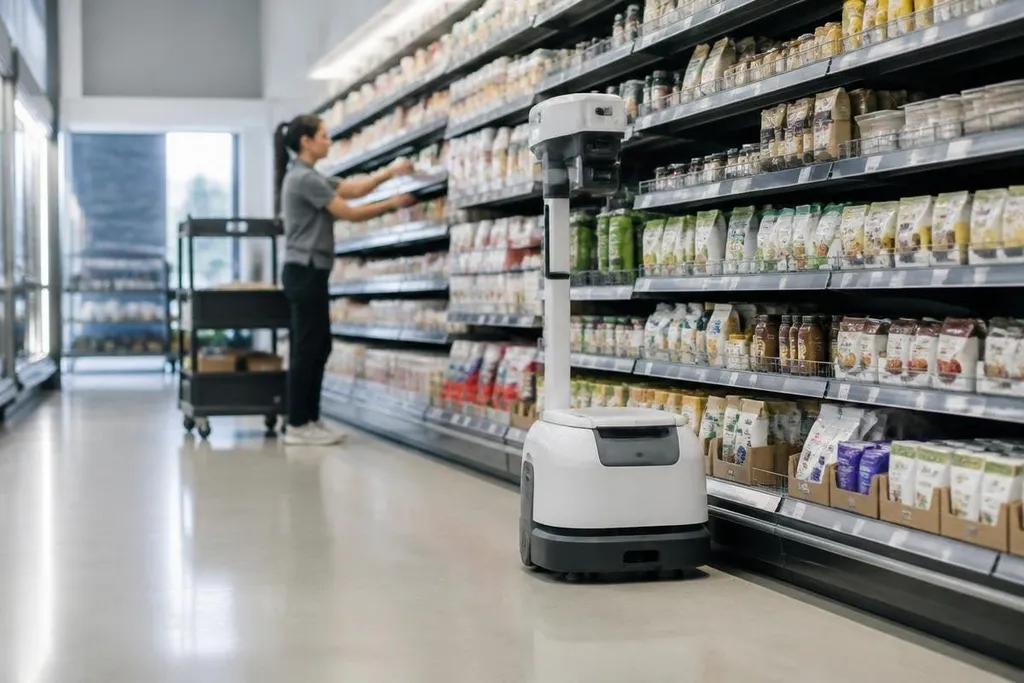
Retail stores have many tasks, but robots will not handle all of them at once. A system may start with shelf checks because cameras can record product gaps, misplaced items, and price labels while the robot follows a set route.
That work has a clear result. A staff member can check the robot’s report, find the shelf, and fix the issue. The store can compare the report with what happened on the floor, which gives the operator a way to judge if the machine helps.
Moving goods is harder. The system needs to find a safe path through aisles, stop for people, carry the right load, and reach the correct shelf or storage area. A route that works after closing may fail during a busy shopping period.
The hardware matters here. LiDAR measures distance with light, cameras read the scene, and wheel or arm sensors help the robot track its movement. None of those parts removes the need for clear rules about speed, stopping, and staff access.
Stores will need better robot work areas
A robot works best when the store gives it a task it can repeat. Marked routes, fixed charging points, readable labels, and storage areas with enough space can reduce the number of times staff must step in.
That may change store design. A retailer could place fast-moving stock in areas that are easier to reach, or set aside a route for stock movement.
The cost is not limited to the robot. It can include new shelving, network equipment, safety checks, and staff training.
A retail robot's price only makes sense beside the task it can finish without staff stepping in. Retail robotics coverage from Robot24.com can connect a named machine with its store task, test setting, and limits, so you can compare the purchase with the work it will actually do.
The store must choose the work before it chooses the robot. A shelf-scanning system needs different hardware from a machine that carries boxes, and a customer guide needs different rules from either one.
People remain part of the system
Retail robots will share space with shoppers and staff, so their behavior must be easy to read. A visible stop button, clear warning lights, and a route that does not block an aisle matter during an ordinary shift, not only during a test.
Staff need a way to correct the robot when a product is moved, a shelf is blocked, or a customer enters its path. Remote help can cover some problems, but a store still needs people nearby who know what the machine can and cannot do.
A machine that gives the wrong location for a product creates extra questions for staff. One that asks for too much personal data may create a trust problem before it creates any saving.
I’d back robots that take on dull, repeatable work first, then earn wider duties through store results.
What remains unproven
The hard part is not showing a robot complete one task. It is keeping that task reliable across different floors, lighting conditions, stock layouts, and levels of foot traffic.
Retailers will need records from normal shifts. They should check how often the robot stops, how many jobs staff must correct, how long charging takes, and what happens when a sensor becomes dirty or a route is blocked.
The price of failure matters too. If a missed shelf check loses a sale, the store needs a way to find that error. If a stock robot blocks an aisle, staff need a safe manual process that takes less time than waiting for remote help.
A store-side decision checklist
Before a retailer approves a pilot, the team should:
- Name one job with a clear result, such as a shelf report or stock delivery.
- Record the time staff spend on that job today.
- Mark the routes, doors, lifts, and storage points the robot must use.
- Set a stop rule for unsafe movement, blocked paths, and sensor faults.
- Check correction work during a full store shift, not only in a quiet test.
- Price the robot, site changes, service, training, and staff time together.
That process turns a broad promise into a test the store can measure. It also shows where a person still needs to make the decision.
The next retail robots will be judged less by how many tasks they claim to support than by how few extra steps they create. The useful question for each store is now specific: which repeated job can a robot finish safely, every shift?